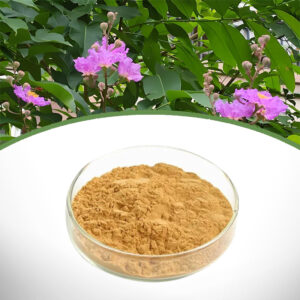

 Vine Tea Extract, derived from Ampelopsis grossedentata leaves native to Southern China, is gaining recognition for its high concentration of dihydromyricetin (DMY), a dihydroflavonol compound constituting 20%-35% of the extract. Peer-reviewed studies validate DMY as the primary bioactive component responsible for its health-promoting properties. With an antioxidant capacity 15-40 times stronger than resveratrol and vitamin E, DMY demonstrates unique structural stability that enhances bioavailability compared to other plant-derived flavonoids.
This water-soluble extract has been documented in traditional Chinese medicine for centuries to support liver health and metabolic balance. Modern research now confirms its role in mitigating oxidative stress, modulating inflammatory pathways, and improving insulin sensitivity. Unlike many herbal extracts, Vine Tea Extract maintains potency across a wide pH range, making it adaptable to diverse formulations.
 Pharmaceuticals & Nutraceuticals
- Active ingredient in hepatoprotective supplements
- Adjuvant in anti-diabetic formulations
- Anti-aging compound in transdermal patches
Food & Beverage Industry
- Natural preservative in baked goods (extends shelf life by 20-30%)
- Functional additive in sports nutrition products (enhances glycogen synthesis)
- Clarifying agent in plant-based dairy alternatives
Cosmeceuticals
- Matrix metalloproteinase inhibitor in anti-wrinkle serums
- UVB-protective additive in sunscreens (SPF-boosting effect)
- Anti-pollution agent in urban skincare lines
Agricultural Applications
- Biostimulant in organic farming to reduce abiotic stress in crops
- Natural alternative to synthetic antioxidants in animal feed